

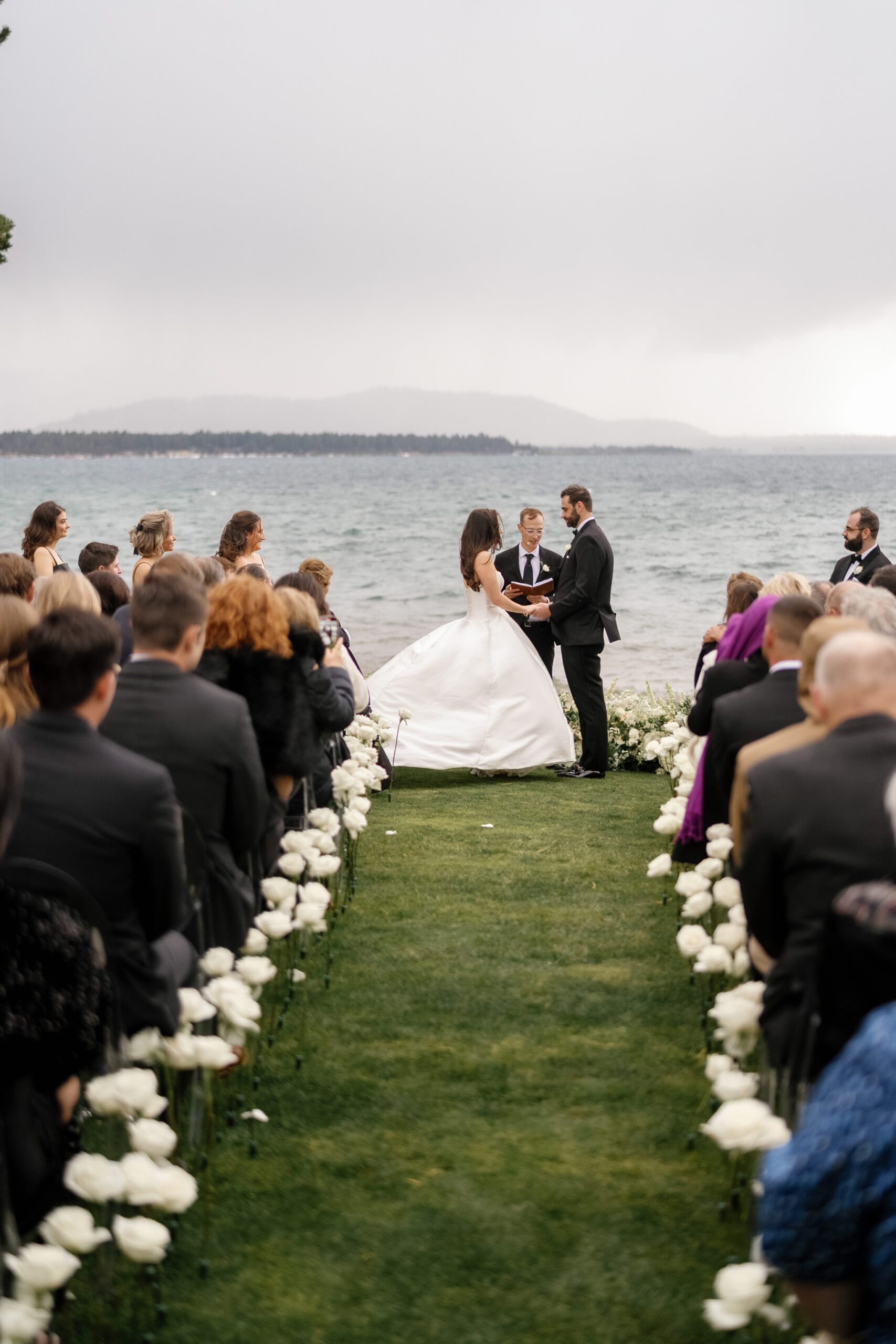
There’s a particular quality to the light in Lake Tahoe that makes photographing weddings here unlike anywhere else. As the sun moves across the Sierra Nevada, the landscape shifts from brilliant, high-altitude light to softer tones that settle over the water and surrounding mountains. These transitions can be subtle or dramatic, and understanding them is an important part of creating beautiful wedding photographs.
At Edgewood Tahoe, the relationship between the lake, mountains, and open sky makes those changes especially compelling. The light you experience during your ceremony may look entirely different by the time you step away for portraits, even when only a short amount of time has passed.
As a Lake Tahoe wedding photographer, I’ve learned that the most memorable images don’t always happen at the moment the sun reaches the horizon. Sometimes it’s the softer light that follows, the unexpected color across the mountains, or a brief opportunity between events that creates something extraordinary.
In this guide, I’ll explore how golden hour, sunset, and alpenglow influence Edgewood Tahoe wedding photography, along with the timing considerations that can help you make the most of the light without arranging your entire celebration around a photograph.
Table of Contents
- Understanding Golden Hour at Edgewood Tahoe
- What Is Alpenglow in Lake Tahoe?
- Planning Your Edgewood Tahoe Wedding Portrait Timeline
- How Tahoe’s Changing Light Influences Wedding Photography
- Creating Beautiful Edgewood Tahoe Wedding Photos Beyond Golden Hour
- Edgewood Tahoe Sunset Wedding Photography FAQs
- Your Edgewood Tahoe Wedding, Beautifully Documented
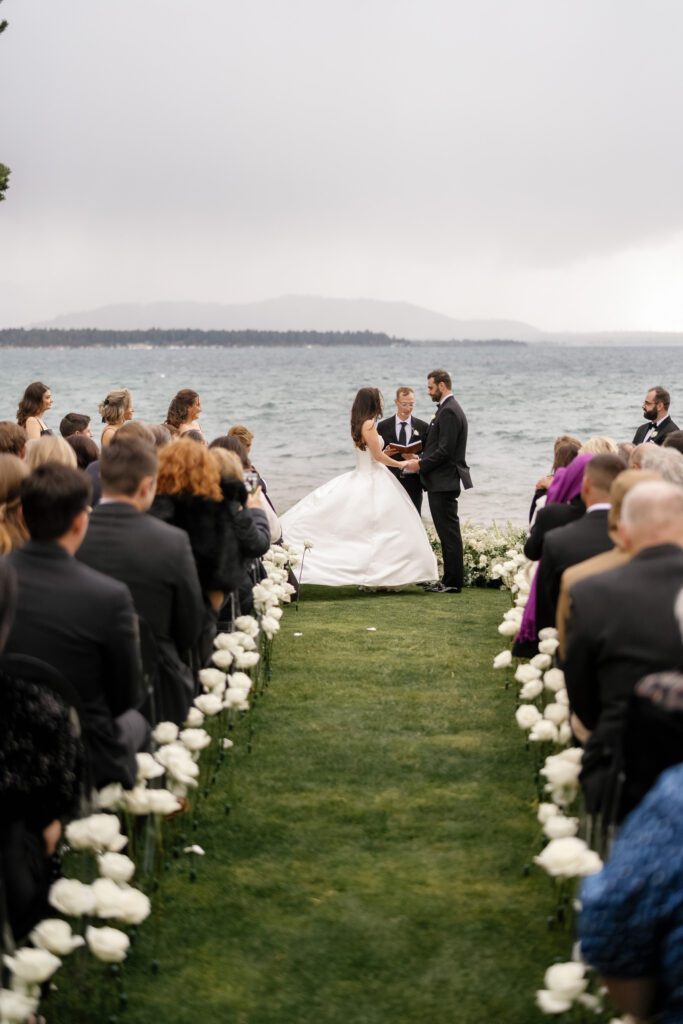
Key Takeaways: Sunset & Alpenglow Wedding Photography at Edgewood Tahoe
- Golden hour doesn’t follow a fixed schedule at Lake Tahoe. While sunset times change throughout the year, the surrounding mountains can influence when direct sunlight disappears from a particular location. Planning portraits around the available light, rather than sunset time alone, can make a meaningful difference.
- Alpenglow and golden hour are two different lighting conditions. Golden hour describes the warm, low-angle sunlight near sunrise or sunset, while alpenglow is the pink or reddish illumination sometimes visible on mountain slopes around twilight. Both can create beautiful photographic opportunities, but neither should be treated as a guaranteed part of the wedding day.
- A thoughtful photography timeline allows room for flexibility. Rather than scheduling an extended portrait session at one specific time, building a few shorter opportunities into the celebration can help couples take advantage of changing conditions without spending too much time away from their guests.
- Beautiful Edgewood Tahoe wedding photographs aren’t limited to sunset. Bright afternoon light, passing clouds, and the softer tones of early evening each offer different creative possibilities. An experienced Lake Tahoe wedding photographer understands how to work with those conditions while preserving natural color and the atmosphere of the day.
Understanding Golden Hour at Edgewood Tahoe
Golden hour is often described as the period just before sunset when sunlight becomes warmer, softer, and more directional. While that definition is useful, photographing weddings in Lake Tahoe requires a more nuanced understanding of how the light interacts with the surrounding landscape.
At Edgewood Tahoe, the Sierra Nevada mountains influence how sunlight reaches different parts of the property. As the sun lowers in the sky, nearby terrain can begin casting shadows well before the published sunset time. This means the window for warm, direct sunlight may be shorter than couples anticipate, particularly during certain times of the year.
Why Sunset Time Doesn’t Tell the Whole Story
One of the most common misconceptions about golden hour wedding photography is that the best light will always occur during the final hour before sunset.
In reality, the most flattering light depends on several factors, including the direction you’re facing, the elevation of the surrounding terrain, and the position of the sun relative to your portrait location.
At Edgewood, a location that receives beautiful direct sunlight earlier in the evening may fall into mountain shadow while the sky remains bright. That transition doesn’t necessarily mean the opportunity for beautiful photographs has passed. It simply changes the character of the light.
Soft, indirect illumination can be particularly beautiful for portraits, allowing natural skin tones and the colors of Lake Tahoe to remain balanced without the stronger contrast of direct sunlight.
Finding the Right Portrait Window
When planning sunset wedding portraits at Edgewood Tahoe, I prefer to consider the quality of the available light rather than relying exclusively on a predetermined time.
A short portrait session while the sun is still illuminating the landscape may produce a completely different result from photographs taken after the mountains begin to cast their shadows. Both can be beautiful, and each offers its own atmosphere.
Understanding these transitions allows me to make thoughtful decisions about where and when to photograph a couple, while keeping the experience relaxed and connected to the celebration.
The goal isn’t necessarily to chase the final minutes of sunlight. It’s to recognize the opportunities the landscape provides and use them with intention.
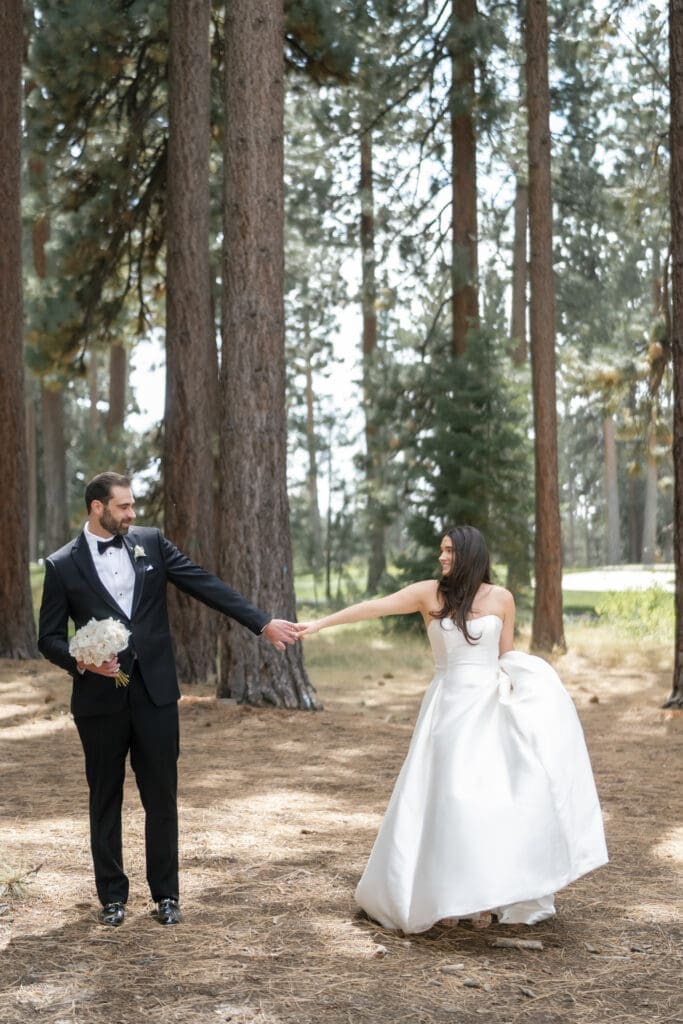
What Is Alpenglow in Lake Tahoe?
Alpenglow is one of the more remarkable lighting effects you can experience in the mountains. Often appearing as a delicate wash of pink, rose, or reddish light across the peaks near sunrise or sunset, it can transform an otherwise familiar landscape into something entirely different.
In Lake Tahoe, the combination of high mountain elevations, expansive skies, and reflective water creates opportunities to witness these fleeting changes in color. Unlike the warm, directional sunlight associated with golden hour, alpenglow is most often noticed on the mountains themselves, sometimes when the sun has already disappeared below the horizon from the viewer’s perspective.
For couples planning an Edgewood Tahoe wedding, understanding this distinction can open up a different way of thinking about their wedding photographs. The most memorable light may arrive after the traditional golden-hour portrait window has ended.
How Alpenglow Changes the Landscape
One of the most beautiful qualities of alpenglow is its subtlety. Rather than illuminating everything evenly, the color can appear concentrated along mountain ridgelines and elevated slopes, creating a contrast between the cooler tones of the lake and the warmer hues of the surrounding peaks.
These conditions can produce photographs with a quieter, more atmospheric quality than those taken in direct sunlight. The landscape becomes layered with color, allowing the mountains to contribute depth and dimension without competing with the couple.
As a photographer who values true-to-color imagery, I find these moments especially compelling. The natural variations between the blue water, muted mountain shadows, and occasional pink tones offer a richness that doesn’t need to be exaggerated in editing.
Can You Plan Wedding Portraits Around Alpenglow?
Alpenglow is something to recognize and take advantage of rather than a lighting condition you can schedule with certainty. Its appearance depends on atmospheric conditions, the position of the sun, and the surrounding terrain. Some evenings offer a striking display, while others transition into twilight without the same visible color.
For that reason, I wouldn’t recommend structuring an entire wedding timeline around the possibility of alpenglow.
Instead, I prefer to leave room for a brief opportunity to step outside if the conditions are particularly beautiful. Sometimes a few minutes are all that’s needed to create a portrait that feels entirely different from the photographs taken earlier in the day.
The experience should remain effortless for the couple. When the light presents an opportunity, we can make the most of it without allowing photography to dictate the celebration.
Planning Your Edgewood Tahoe Wedding Portrait Timeline
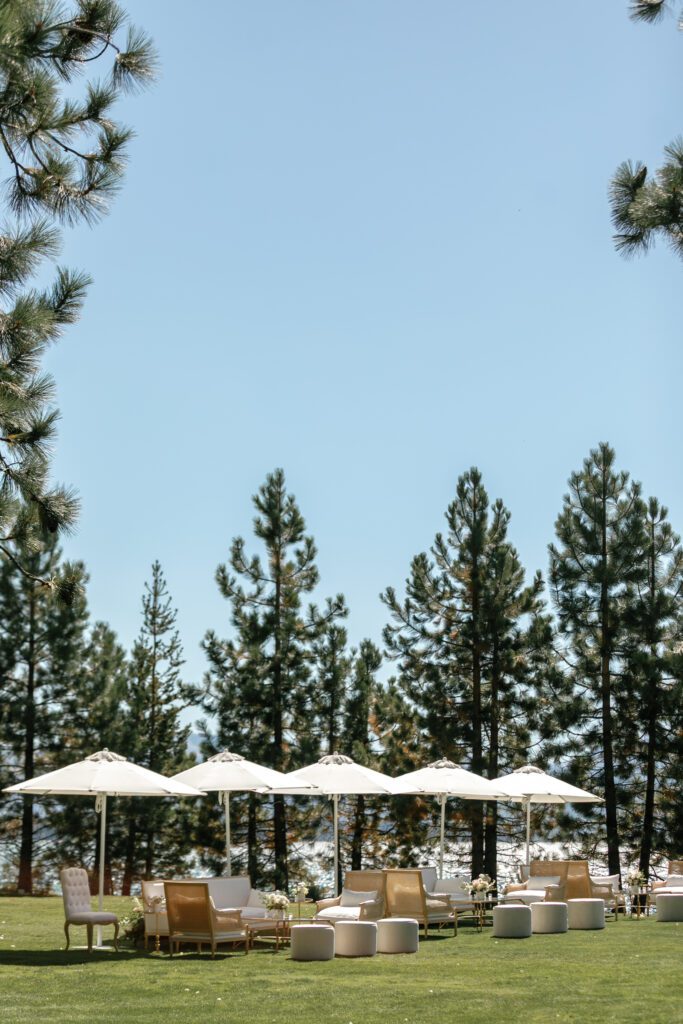
A well-considered wedding photography timeline should create opportunities rather than obligations. At Edgewood Tahoe, where the quality of light can change considerably throughout the evening, I prefer an approach that allows us to work with those transitions without pulling you away from your celebration for an extended period.
The most effective timelines account for more than the published sunset time. They consider when portraits will feel natural within the flow of the day, how much time is available between events, and which photographs matter most to you.
Schedule Portraits Around the Experience, Not Just the Sunset
It’s tempting to plan every portrait around golden hour, but that isn’t always the best approach for a wedding with a full guest list and a thoughtfully designed reception.
If your ceremony ends shortly before dinner, for example, you may prefer to spend cocktail hour with your guests rather than dedicate that entire window to photography. In that situation, we can plan a shorter portrait session earlier in the day and leave the option of stepping outside briefly when the evening light is especially beautiful.
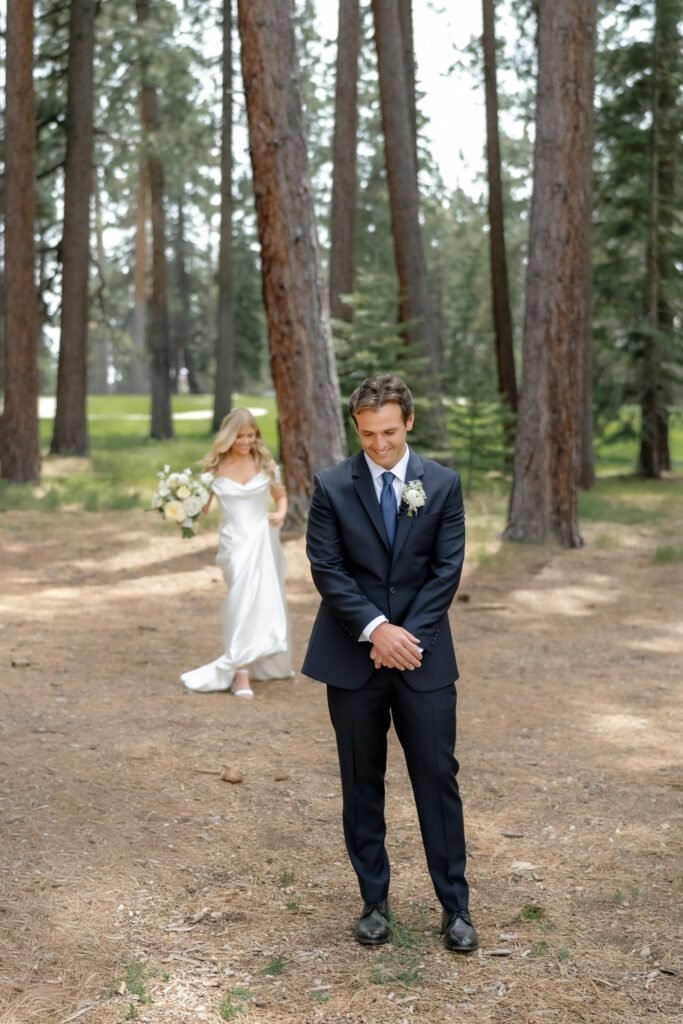
For couples who choose to see each other before the ceremony, a first look can also provide an opportunity to complete some portraits earlier. This creates greater flexibility later, particularly when the schedule includes family photographs, a large wedding party, or an elaborate reception entrance.
Neither approach is inherently better. The right timeline depends on how you want to experience your wedding day.
Allow Time for a Brief Evening Portrait Session
Some of my favorite opportunities for wedding portraits happen during the transition between the formal events of the day and the more relaxed atmosphere of the evening.
Rather than reserving an entire hour for sunset photographs, I often prefer the flexibility of a brief portrait session when the conditions are particularly beautiful. Depending on the schedule and available light, even ten to fifteen minutes can provide an opportunity to create something distinct from the portraits taken earlier.
This approach also allows us to respond to the conditions we’re actually experiencing. If the mountains begin casting shadows earlier than anticipated, we can adjust. If the sky develops beautiful color later in the evening, we may have an opportunity to take advantage of it.
The key is building enough flexibility into the schedule that these decisions feel natural rather than disruptive.
Coordinate Your Photography Timeline with Your Planner
At a venue like Edgewood Tahoe, the wedding timeline involves several moving parts, from ceremony preparations and guest arrivals to cocktail hour, dinner service, and reception events.
I recommend coordinating portrait timing with your wedding planner before the schedule is finalized. This allows us to identify opportunities for photographs without creating unnecessary transitions or interrupting moments you’ve been looking forward to.
For example, if your reception includes a carefully designed room reveal, we may want to reserve a few minutes to photograph the space before guests enter. If family portraits are a priority, we can plan those efficiently so the evening remains relaxed.
These details may seem small individually, but together they contribute to a photography experience that feels organized without being overly structured.
Ultimately, the purpose of a thoughtful timeline isn’t to control every moment. It’s to create enough space for the moments that matter, including the ones no one could have anticipated.
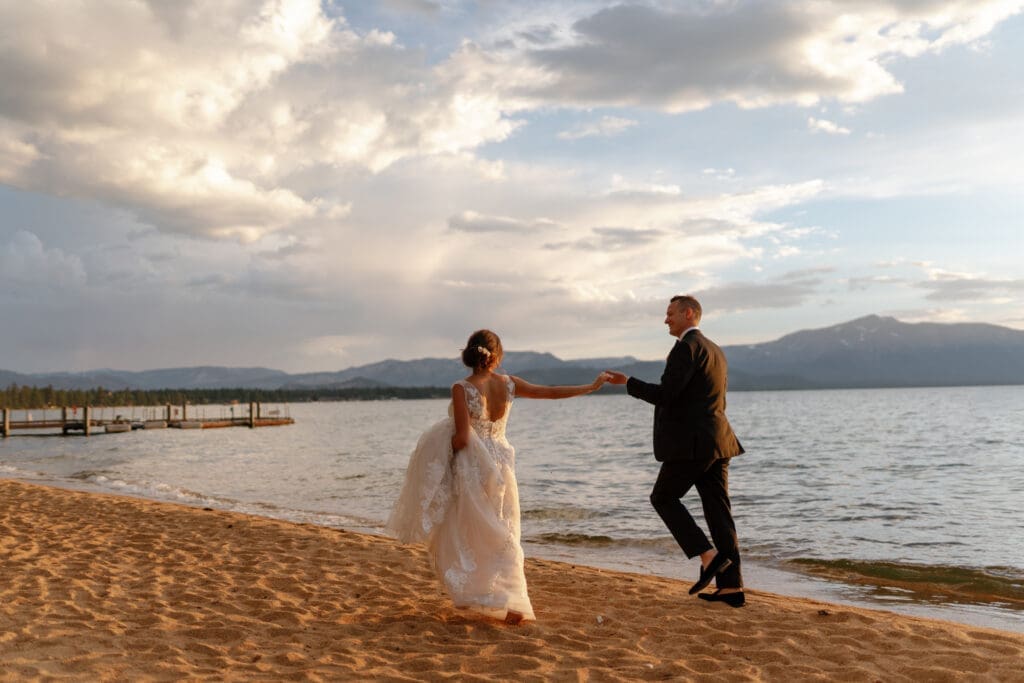
How Tahoe’s Changing Light Influences Wedding Photography
One of the challenges of photographing a wedding in Lake Tahoe is the extraordinary range of light you can experience within a single celebration. The same landscape that appears vibrant and sharply defined in the afternoon can take on an entirely different character as evening approaches.
For me, understanding those transitions is about more than finding beautiful light. It’s about knowing how to preserve the atmosphere of each moment while creating a wedding gallery that feels consistent from beginning to end.
Preserving the Natural Colors of Lake Tahoe
Color is one of the defining elements of my photography. When couples choose Lake Tahoe for their wedding, they’re often drawn to the clarity of the water, the depth of the surrounding forests, and the distinctive tones of the mountain landscape.
I believe those colors deserve to be represented honestly.
Bright sunlight can make the lake appear especially vibrant, while softer evening conditions introduce cooler blues and more muted tones. Rather than applying the same treatment to every photograph, I pay attention to how the colors naturally respond to the available light.
This is particularly important when photographing people against the landscape. Skin tones should remain natural, and the surrounding environment should retain its character without competing for attention.
The result is a collection of photographs that reflects the beauty of Lake Tahoe as it was experienced, rather than an interpretation that depends on a particular editing trend.
Finding Balance Between Light, Shadow, and Composition
Some of the most interesting photographs happen when the lighting conditions aren’t immediately straightforward.
Strong afternoon sunlight can create pronounced shadows, while the transition into evening may introduce significant differences in brightness between the sky, mountains, and foreground.
These conditions require an awareness of how light falls across a scene and how the composition can bring its different elements together.
Sometimes that means adjusting the angle of a portrait to create more flattering illumination. Other times, it means embracing the contrast between light and shadow to produce an image with greater depth and visual interest.
My approach is to make those decisions quietly, offering direction when it’s useful while allowing the experience to remain natural.
Ultimately, I want the photographs to feel connected to the day itself. The light may change, but the images should retain a sense of continuity, preserving both the visual beauty of the celebration and the moments that give it meaning.
Creating Beautiful Edgewood Tahoe Wedding Photos Beyond Golden Hour
While golden hour receives much of the attention in wedding photography, some of the most compelling images are created under entirely different conditions. At Edgewood Tahoe, beautiful photographs aren’t dependent on a particular sunset or a perfectly clear evening.
Finding Beauty in Every Lighting Condition
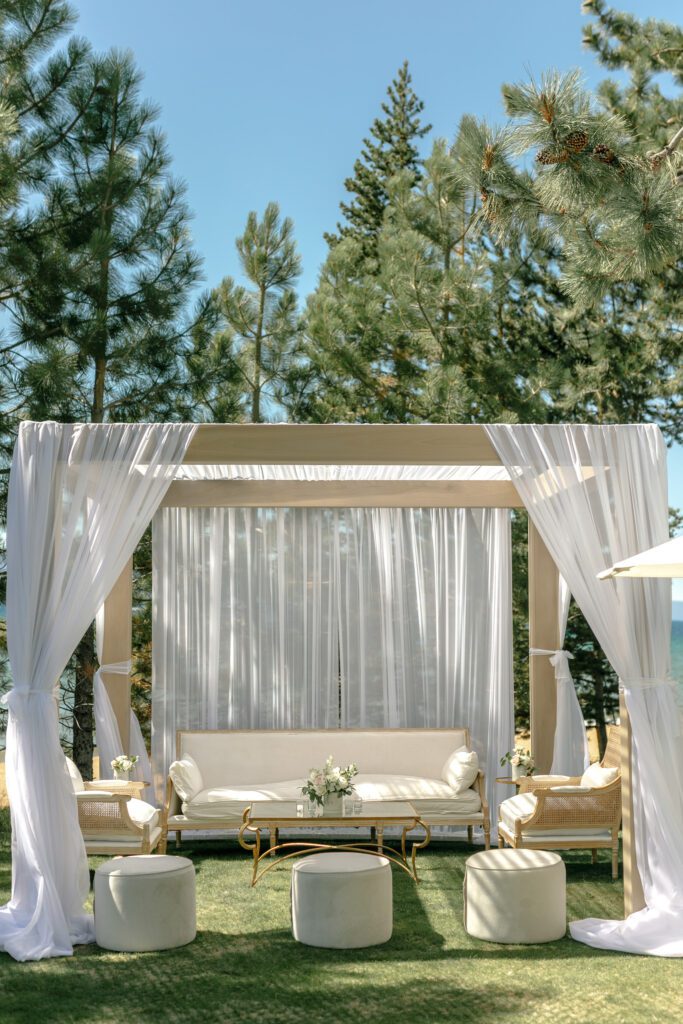
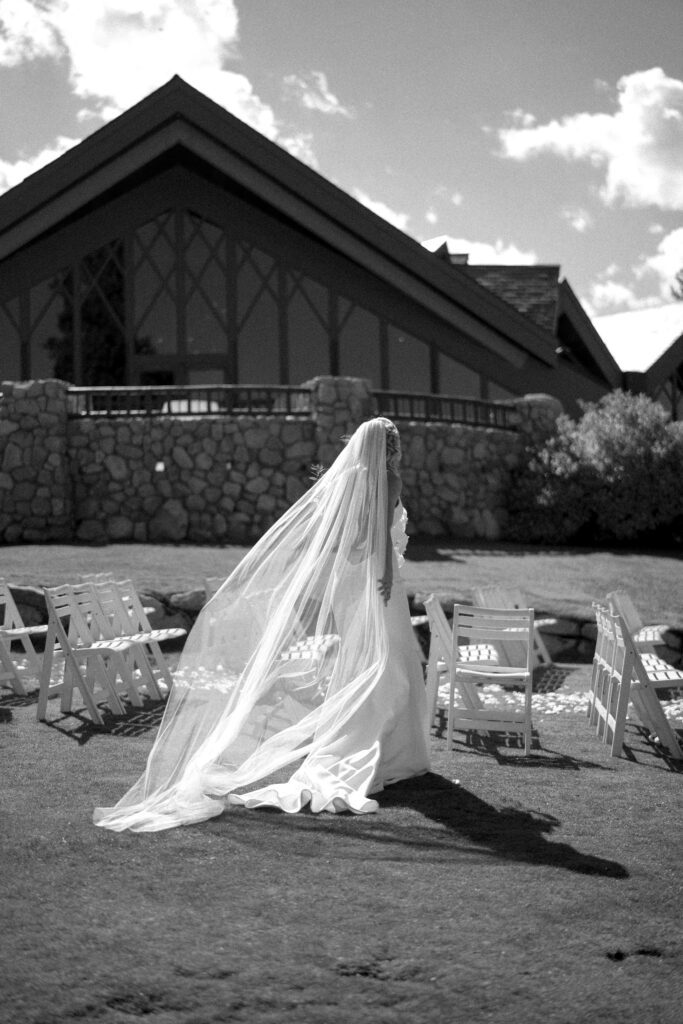
Bright afternoon sunlight can lend a crisp, architectural quality to photographs, particularly when paired with intentional composition. Overcast skies, meanwhile, often provide soft, even illumination that allows the expressions and details of a celebration to take precedence.
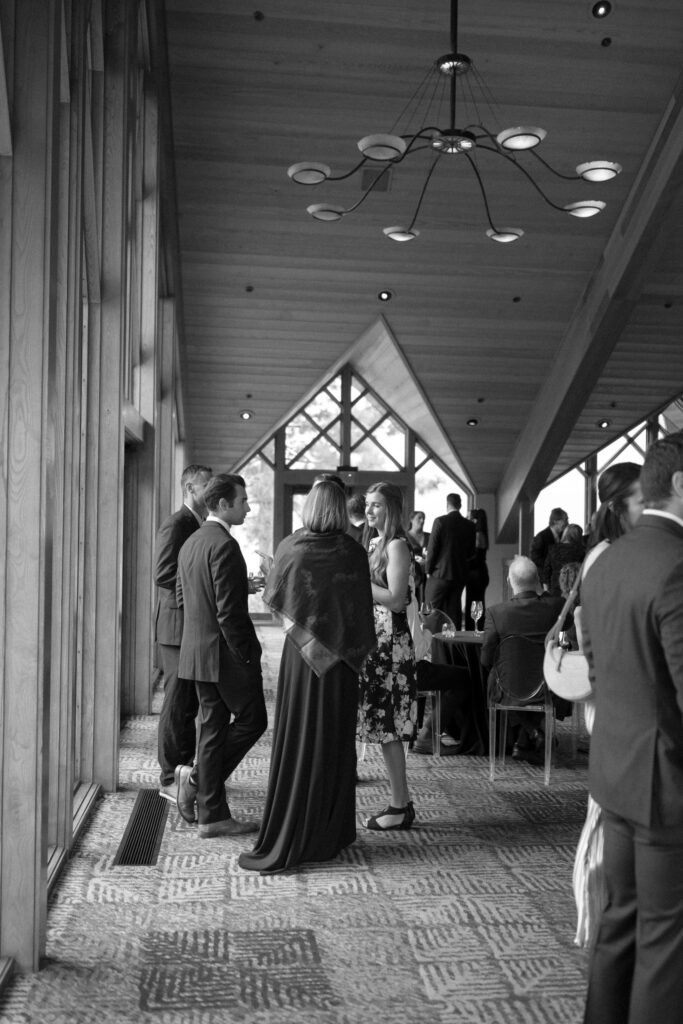
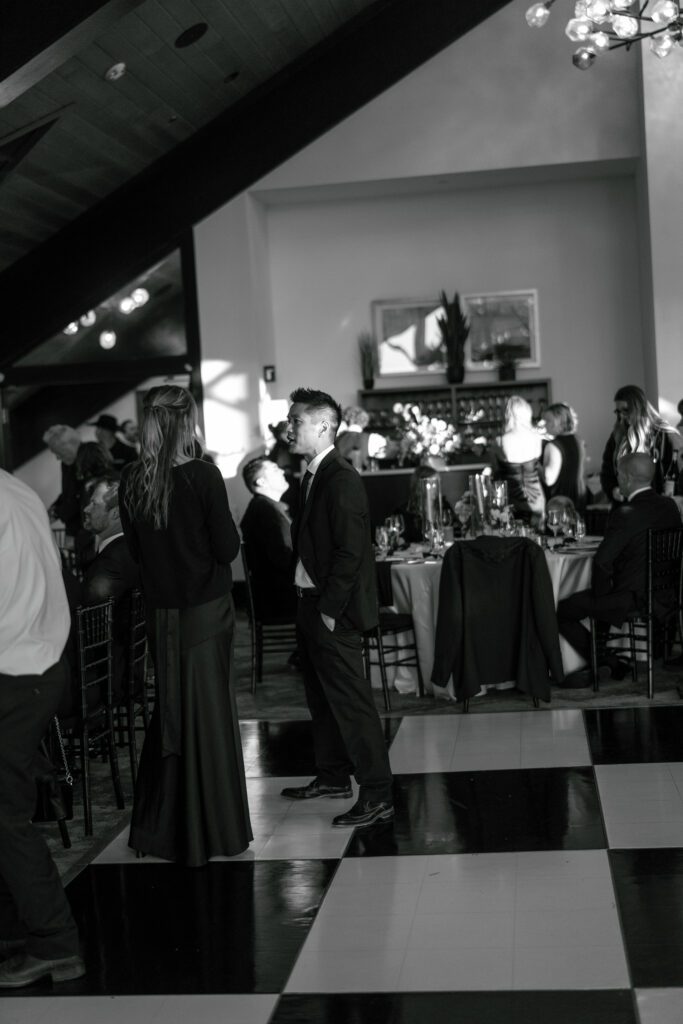
Indoor environments offer another opportunity to create something distinctive. Window light, architectural features, and thoughtfully designed interiors can produce portraits that feel intimate and editorial without relying on the surrounding landscape.
What matters most is understanding how to work with the conditions available rather than trying to recreate a specific photograph.
A Wedding Gallery That Reflects the Entire Celebration
A beautiful wedding gallery should represent more than a handful of portraits taken at sunset. It should preserve the anticipation before the ceremony, the atmosphere of the reception, and the interactions that happen when no one is thinking about the camera.
My priority is to document those moments with the same care given to the more carefully composed images.
Golden hour and alpenglow can bring something extraordinary to an Edgewood Tahoe wedding, but they’re only part of the story. The photographs that remain meaningful years later are often the ones that bring you back to how the day actually felt.
Edgewood Tahoe Sunset Wedding Photography FAQs
What is the best time for sunset wedding photos at Edgewood Tahoe?
The best time for sunset wedding photos at Edgewood Tahoe depends on your wedding date, the position of the sun, and when the surrounding mountains begin casting shadows across the property. The most flattering portrait light may arrive before the published sunset time. I recommend reviewing the timeline with your photographer so you can identify the best opportunities for your particular date.
Is alpenglow guaranteed during a Lake Tahoe wedding?
No, alpenglow is not guaranteed during a Lake Tahoe wedding. The pink and reddish tones sometimes visible across the mountains depend on atmospheric conditions, sunlight, and the surrounding landscape. While it can create a beautiful opportunity for wedding portraits, I recommend treating alpenglow as an unexpected addition to your photographs rather than something the celebration depends on.
How much time should we allow for golden-hour wedding portraits?
For many Edgewood Tahoe weddings, a brief portrait session of approximately 10–15 minutes can be enough to capture a beautiful selection of evening photographs, particularly if you’ve already completed portraits earlier in the day. The ideal amount of time depends on your priorities, the available light, and your wedding schedule. I prefer to build flexibility into the timeline so photography feels like a natural part of the celebration rather than an interruption.
Your Edgewood Tahoe Wedding, Beautifully Documented
The photographs you’ll treasure most should bring you back to more than how your wedding looked. They should remind you of the people who surrounded you, the atmosphere of the celebration, and the moments you didn’t realize were unfolding.
Having photographed weddings at Edgewood Tahoe, I understand how to work with the property’s distinctive light while giving you the freedom to remain present throughout your day. My approach brings together thoughtful composition, natural color, and an appreciation for the moments that deserve to be remembered exactly as they happened.
If you’re planning an Edgewood Tahoe wedding, I’d love to hear what you’re envisioning. Get in touch to discuss your wedding photography.


